

Fresh vs Frozen Embryo Transfer: Which Has Better IVF Success Rates?
Couples starting IVF treatment often ask one key question: should we choose a fresh embryo transfer or a frozen embryo transfer? Both options carry distinct advantages, and the right choice depends on your body’s response to stimulation, your medical history, and your fertility doctor’s recommendation. This guide breaks down the pros and cons of each method so you can make an informed decision with your care team.
What Is Fresh Embryo Transfer?
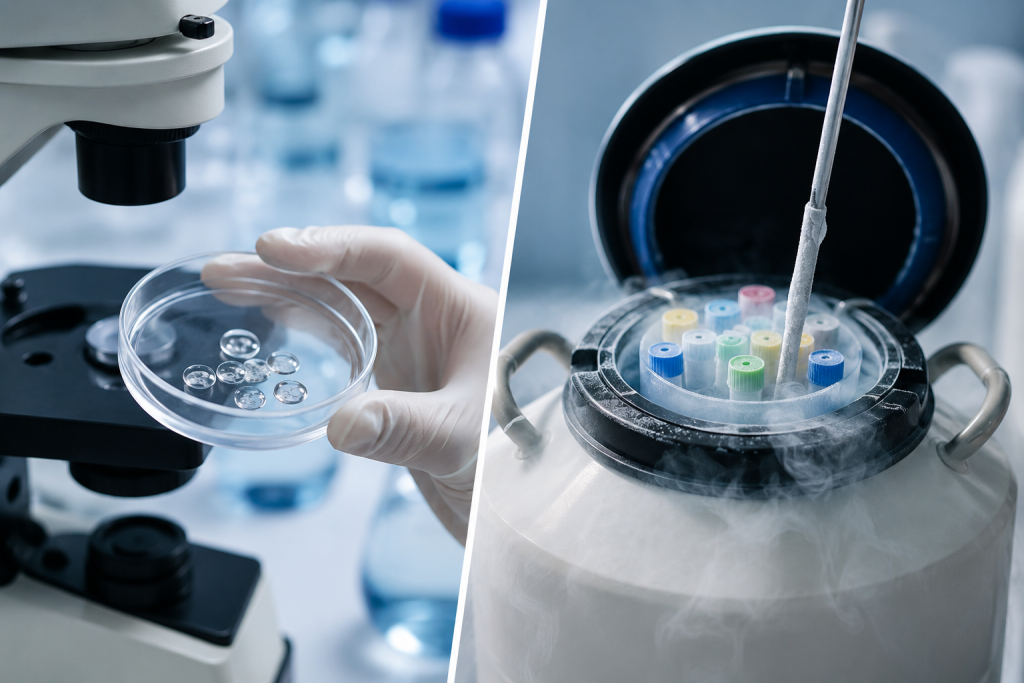
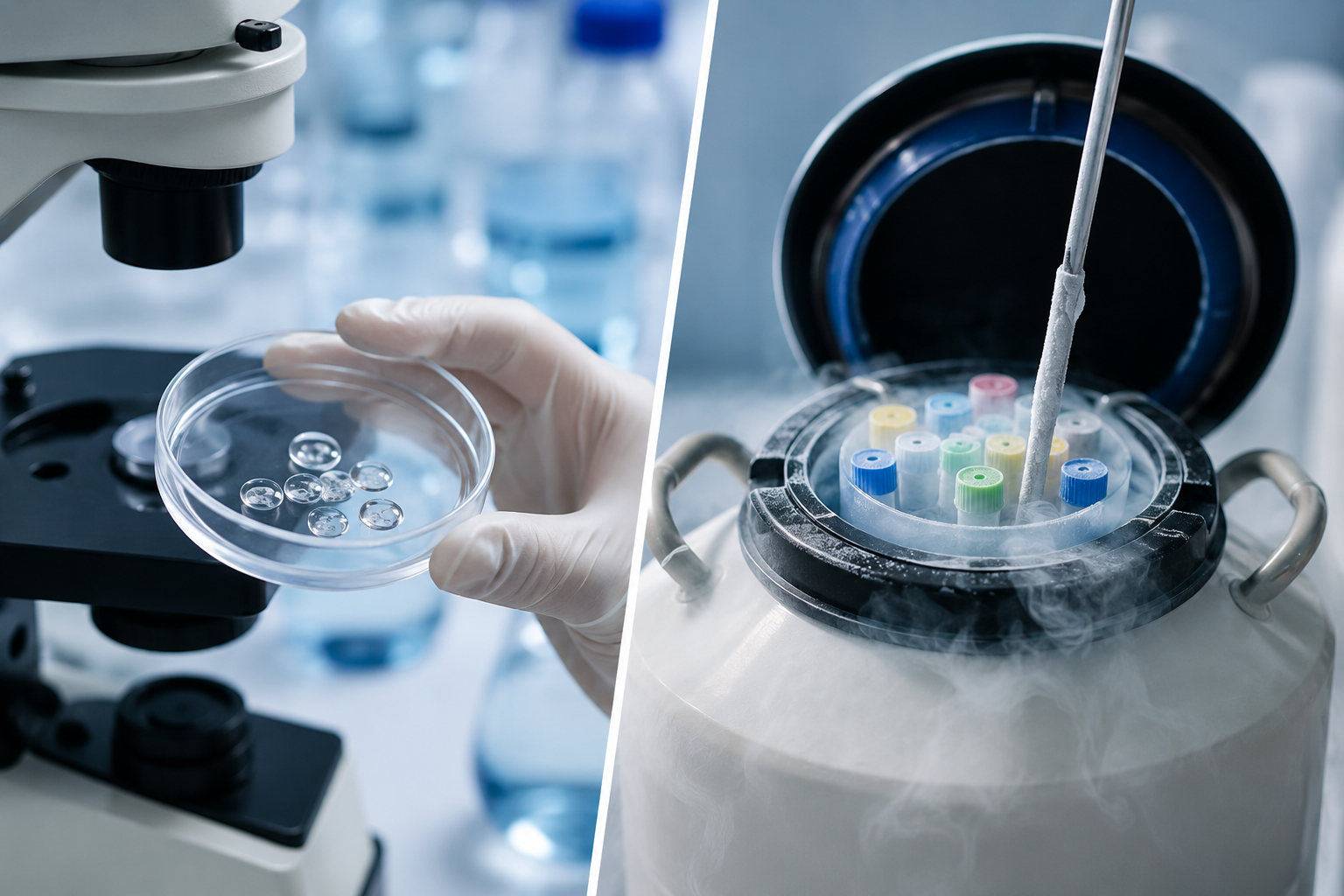
In a fresh embryo transfer, doctors retrieve eggs, fertilize them in the lab, and transfer the resulting embryo into the uterus within 3 to 5 days — all in the same IVF cycle. This approach skips the freezing and thawing process entirely, moving from egg retrieval to transfer in one continuous cycle.
Pros of Fresh Embryo Transfer
- Shorter treatment timeline. Patients complete retrieval and transfer within a single cycle, avoiding the wait associated with a frozen cycle.
- Lower overall cost in some cases. Since there’s no freezing, storage, or a separate thaw cycle, fresh transfers can reduce certain treatment expenses.
- Fewer clinic visits. The compressed timeline means fewer monitoring appointments spread over a shorter period.
Cons of Fresh Embryo Transfer
- Hormonal levels remain elevated. Ovarian stimulation drugs can leave estrogen and progesterone levels high at the time of transfer, which may affect the uterine lining’s receptivity.
- Higher risk of Ovarian Hyperstimulation Syndrome (OHSS). Transferring in the same stimulated cycle can increase OHSS risk in women who respond strongly to fertility medications.
- Less flexibility for genetic testing. Fresh cycles offer a narrower window if the couple wants to complete pre-implantation genetic testing (PGT) before transfer.
What Is Frozen Embryo Transfer?
A frozen embryo transfer (FET) involves freezing embryos using vitrification (a fast-freeze technique) after retrieval and fertilization, then transferring them in a later cycle — once hormone levels return to a natural, more stable state and the uterine lining is optimally prepared.
Pros of Frozen Embryo Transfer
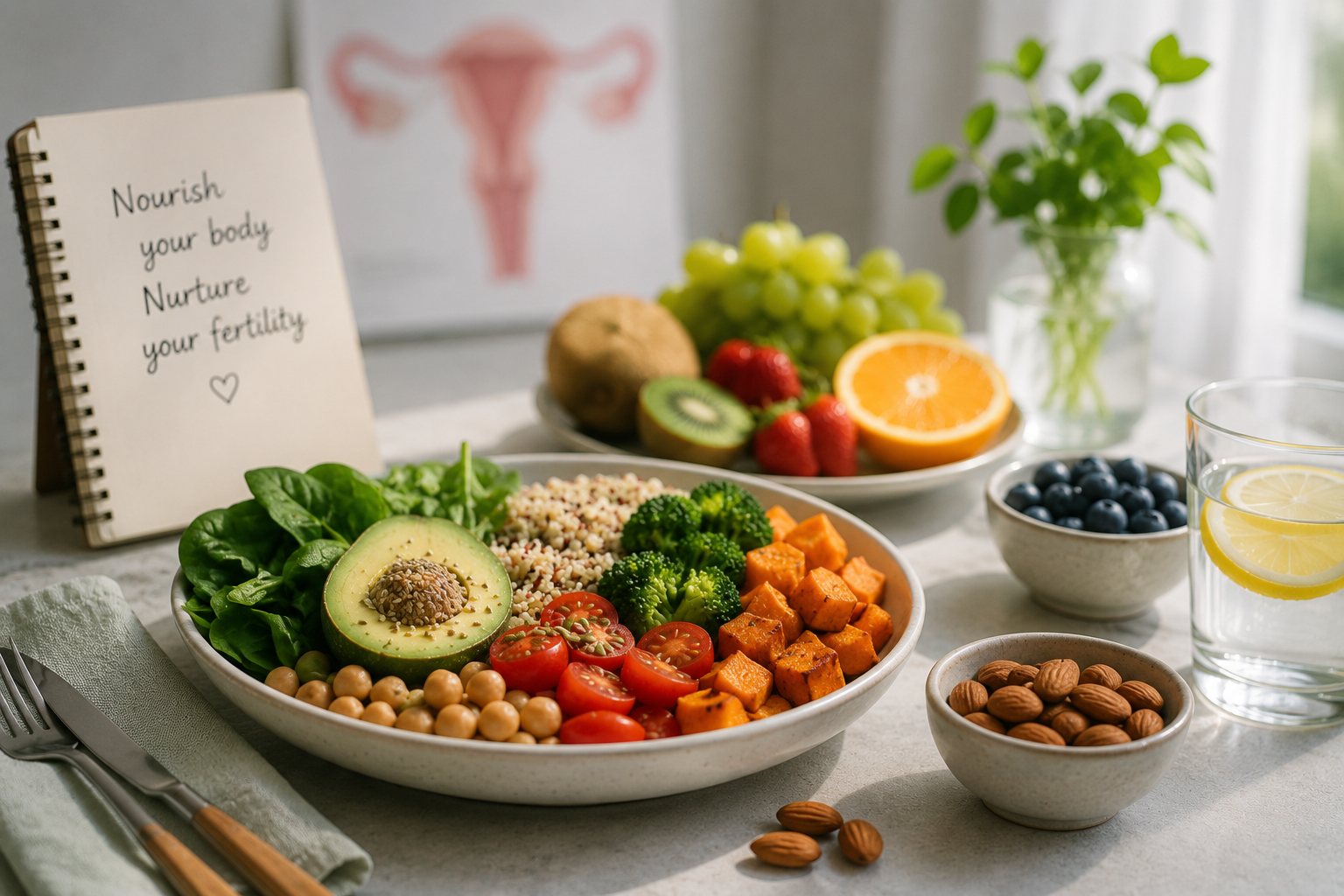
Eggs, lentils, chicken, and paneer supply amino acids that the body uses to build healthy egg cells and support embryo growth. Protein-rich meals also help stabilize blood sugar, which keeps hormone signaling consistent throughout the treatment cycle.
- Better uterine lining synchronization. Doctors can time the transfer precisely when the endometrium is most receptive, often improving implantation outcomes.
- Lower OHSS risk. Since transfer happens in a later, non-stimulated cycle, the body has time to recover from ovarian stimulation medications.
- Time for genetic screening. FET allows embryos to be tested for chromosomal abnormalities (PGT-A) before transfer, helping fertility doctors select the healthiest embryo.
- Flexibility in scheduling. Couples can plan the transfer around personal, medical, or travel commitments without rushing the process.
Cons of Frozen Embryo Transfer
- Longer overall treatment timeline. Patients typically wait for at least one additional menstrual cycle before the transfer takes place.
- Additional costs. Freezing, embryo storage, and a separate thaw-and-transfer cycle can add to the overall treatment cost.
- Requires careful thaw handling. Embryo survival after thawing depends on the lab’s expertise and freezing technique, making an experienced embryology team essential.
Fresh vs Frozen Embryo Transfer: Success Rates
Recent fertility research shows that frozen embryo transfer often delivers comparable or higher success rates than fresh transfer, particularly in women who respond strongly to ovarian stimulation or who have elevated progesterone levels at retrieval. However, success rates vary from patient to patient, which is why an individualized evaluation by experienced fertility doctors matters more than a one-size-fits-all approach.
How Fertility Doctors Decide Between Fresh and Frozen Transfer
Fertility doctors evaluate several factors before recommending fresh or frozen embryo transfer:
- Hormone levels during stimulation — high estrogen or progesterone often favors a frozen approach.
- Risk of OHSS — women at higher risk are usually advised to freeze embryos and transfer later.
- Uterine lining thickness and receptivity — a frozen cycle allows doctors to optimize the lining before transfer.
- Need for genetic testing — couples opting for PGT-A or PGT-M require a frozen cycle to allow time for lab results.
- Age and ovarian reserve — these factors influence how many embryos are available and how transfer timing is planned.
Choosing the Right Fertility Centre in India
Selecting an experienced fertility centre in India is just as important as choosing between fresh and frozen transfer. Look for a centre with:
- A dedicated team of fertility doctors who personalize treatment protocols
- Advanced embryology labs equipped with vitrification technology
- Transparent success rate data and treatment cost breakdowns
- Ongoing counseling and support throughout the IVF journey
At Wonder IVF, our fertility doctors assess each patient’s hormonal profile, ovarian response, and medical history to recommend the transfer method best suited to their individual needs — whether that means proceeding with a fresh transfer or planning a frozen cycle for optimal results.
Visit Wonder IVF Near You
Wonder IVF is expanding access to advanced fertility care with centres designed around patient comfort and clinical excellence:
- IVF Centre in Andheri, Mumbai — offering comprehensive fertility evaluations, fresh and frozen embryo transfer, and personalized treatment plans for couples across Mumbai.
- IVF Centre in Kolhapur — bringing advanced IVF technology and experienced fertility doctors closer to patients in Kolhapur and surrounding areas.
Frequently Asked Questions
Both methods are considered safe. Frozen transfer is often recommended for patients at risk of OHSS or those needing genetic testing, since it allows the body to recover from stimulation medications first.
No. Many studies show frozen embryo transfer can match or exceed fresh transfer success rates, especially when the uterine lining is well-prepared before transfer.
Your fertility doctor will review your hormone levels, ovarian response, and overall health to recommend the transfer method most likely to succeed for your specific case.
Book a Consultation
Choosing between fresh and frozen embryo transfer is a decision best made with expert guidance. Connect with the fertility doctors at Wonder IVF to discuss your treatment plan and take the next step toward parenthood.